V.S.M.E
Voluntary Sustainability Reporting Standard
Voluntary Sustainability Reporting Standard for SMEs (VSME)
The Voluntary Sustainability Reporting Standard for SMEs (VSME), developed by EFRAG, provides small and medium-sized enterprises with a clear, structured, and proportionate framework to disclose their environmental, social, and governance (ESG) performance.
At CG Business Consulting, we help SMEs turn sustainability reporting into a competitive advantage — backed by hands-on support, strategic insight, and real-world experience.
What is VSME?
VSME is a voluntary EU-wide framework created specifically for non-listed SMEs. It is designed to:
- Simplify sustainability disclosures
- Meet increasing stakeholder and regulatory demands
- Prepare businesses for future compliance with the Corporate Sustainability Reporting Directive (CSRD)
The final VSME draft has now been published by EFRAG to the European Commission. (Download here: VSME Standard.pdf.)
What does the VSME standard include?
It comprises two modules, the Basic Module and the Comprehensive Module, the requirements for each are outlined below.
Both modules follow the ‘if-applicable’ principle: companies only have to provide the information that applies to them, which limits the reporting effort.
This results in two options for VSME reporting:
- Reporting exclusively according to the ‘Basic Module’
- Reporting both the ‘Basic Module’ and the ‘Comprehensive Module’
1. Basic Module
- General information on the chosen reporting option, omitted information, subsidiaries and sustainability certifications
- Practices, strategies and future sustainability-related initiatives
- Environmental metrics such as energy consumption, greenhouse gas emissions, water use and waste management
- Social aspects including labour practices, compensation, health and employee training
- Governance topics, in particular anti-corruption, bribery and compliance
2. Comprehensive Module
Companies that have to meet specific requirements of external stakeholders can use the ‘Comprehensive Module’. It builds on the ‘Basic Module’ and contains 9 additional reporting topics with a total of 41 data points:
- Detailed climate reporting including emission reduction targets and climate risks if applicable
- Advanced social key figures, such as human rights and diversity in the workforce
- Further governance topics such as revenue from controversial sectors or gender diversity in management
Steps to Conduct a Double Materiality Assessment
1. Define Scope and Objectives
- Determine the purpose of the assessment and identify relevant ESG factors and frameworks like CSRD or GRI.
2. Map and Engage Stakeholders
- Identify key stakeholders and gather insights through surveys, interviews, or workshops to understand their priorities.
3. Identify and Prioritise Material Topics
- Research and refine ESG topics using industry benchmarks, peer analysis, and stakeholder feedback.
4. Assess Financial and Impact Materiality
- Evaluate how ESG factors affect your business’s financial performance and societal / environmental impact.
5. Analyse and Validate Findings
- Create a materiality matrix to prioritise topics and review findings with leadership and stakeholders.
6. ESG Road Map
- Publish results, align strategies with insights, and update the assessment regularly to reflect evolving conditions.
Leading by Example:
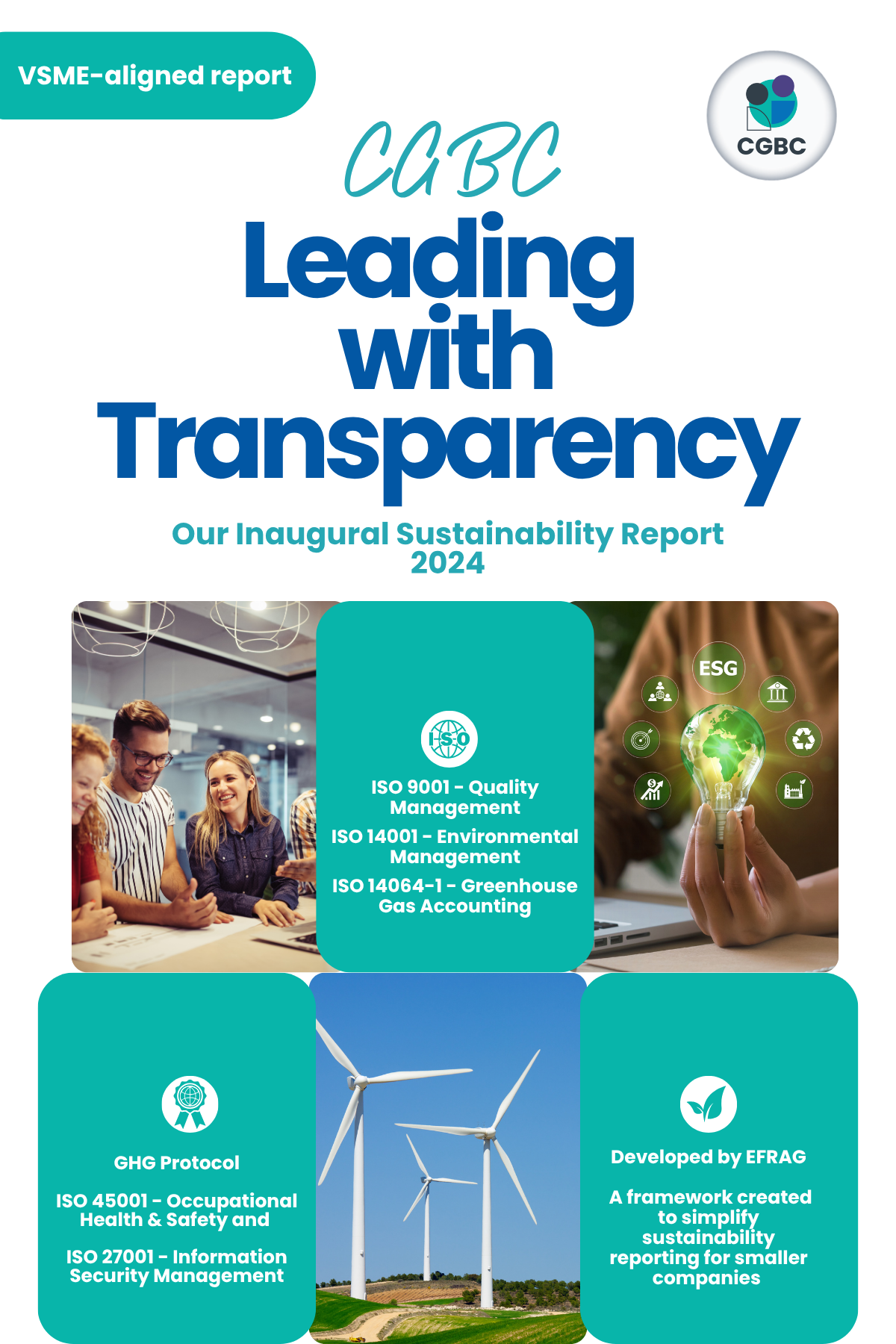
At CGBC, we don’t just advise on sustainability, we lead by example. We’ve completed and published our own VSME aligned sustainability report to demonstrate our commitment to transparency, responsible business, and continuous improvement.
In line with our commitment to sustainability leadership, CG Business Consulting is proud to announce the publication of our inaugural VSME report. To access the report, please complete the form above to download your copy.
This experience means we bring first-hand insight into the process, challenges, and opportunities of VSME reporting. When you work with us, you're guided by a team that knows exactly what it takes, because we've done it ourselves.
Why SMEs Are Adopting VSME?
- Win Contracts – Meet ESG criteria in tenders and procurement
- Secure Green Financing – Improve access to sustainable investment
- Build Brand Trust – Strengthen relationships with customers and stakeholders
- Increase Efficiency – Identify cost-saving environmental improvements
- Stay Ahead – Prepare for CSRD and market-driven ESG requirements
Our VSME Services Include the Following:
- VSME Reporting & Disclosure
- Gap Analysis & Stakeholder Mapping
- ESG Roadmaps & Implementation Plans
- VSME Training Workshops
- Integration with ISO/CSRD Frameworks
- Ongoing Advisory & Funding Support
VSME Training for Your Team
- How the VSME framework works (Basic & Comprehensive Modules)
- How to interpret and respond to ESG data requirements
- Practical steps for gathering information and reporting
- How to integrate VSME with ISO, CSRD or other reporting systems
Access Enterprise Ireland & IDA Green Funding
- GreenStart – For early-stage sustainability actions
- GreenPlus – For strategy development and reporting system implementation
- Climate Action Voucher – For working with expert consultants
- Green Transition Fund – For long-term decarbonisation projects
Why Choose CG Business Consulting?
Our Expert Team Includes:
-
Noel Conaty – Head of Climate Change & Sustainability, specialising in environmental and energy management strategies.
-
Manuel Gonzalez – Globally recognised Senior GHG consultant, expert in sustainability reporting and actively contributing to ISO’s Net Zero frameworks.
-
Helen Budowsky – Energy & Environmental Consultant specialising in ISO-compliant greenhouse gas inventories and decarbonisation strategies.
-
Reed Yu - Sustainability Consultant specialising in carbon inventory and sustainability reporting.
-
Carolina Vindas - Expert in carbon footprint, Net Zero pathways, life cycle analysis (LCA) and sustainability reporting.
Book a Free Consultation
From the consultation you will:
- Speak directly to an ISO professional
- Get expert advice on your business requirement
- Understand the benefits of certification for your business
Frequently Asked Questions:
-
What is the Voluntary Sustainability Reporting Standard for SMEs (VSME)?
The Voluntary Sustainability Reporting Standard for SMEs (VSME) is a sustainability reporting framework developed by the European Financial Reporting Advisory Group (EFRAG) for non-listed small and medium-sized enterprises. It provides a practical way for businesses to report their environmental, social and governance (ESG) performance without the complexity of the Corporate Sustainability Reporting Directive (CSRD). VSME helps SMEs demonstrate sustainability performance, respond to customer requests and prepare for future regulatory developments.
-
Is VSME reporting mandatory?
No. VSME is a voluntary reporting standard designed for SMEs that are not directly required to comply with the Corporate Sustainability Reporting Directive (CSRD). However, many organisations choose to adopt VSME because customers, investors, lenders and supply chain partners increasingly request sustainability information. Implementing VSME can help businesses remain competitive and better prepared for evolving ESG expectations.
-
Who should use the VSME Standard?.
A VSME report typically includes information on a company's environmental impact, greenhouse gas emissions, energy and resource use, workforce, governance, business ethics and sustainability policies. Depending on the reporting module selected, businesses may also disclose climate-related risks, targets and other sustainability metrics relevant to their operations.
-
What information is included in a VSME report?
A VSME report typically includes information on a company's environmental impact, greenhouse gas emissions, energy and resource use, workforce, governance, business ethics and sustainability policies. Depending on the reporting module selected, businesses may also disclose climate-related risks, targets and other sustainability metrics relevant to their operations.

-
What is the difference between VSME and CSRD?
VSME is a voluntary sustainability reporting framework for non-listed SMEs, while CSRD is a mandatory reporting directive for certain large companies and listed organisations within the European Union. VSME provides a simpler, proportionate approach to sustainability reporting, allowing SMEs to communicate ESG information without meeting the full reporting requirements of the European Sustainability Reporting Standards (ESRS).
-
Does VSME require a Double Materiality Assessment?
A formal Double Materiality Assessment is not a mandatory requirement of the VSME Standard in the same way it is under CSRD. However, businesses may still benefit from identifying the sustainability topics that are most relevant to both their organisation and stakeholders. This helps ensure reporting focuses on the issues with the greatest business and sustainability impact.
-
What are the benefits of implementing VSME?
Implementing VSME can help businesses strengthen customer relationships, meet supply chain sustainability requirements, improve access to finance, enhance ESG transparency and prepare for future regulations. It also provides a structured framework for measuring sustainability performance and identifying opportunities for continuous improvement.
-
How long does it take to prepare a VSME report?
The time required depends on the size and complexity of the organisation and the availability of sustainability data. Businesses with existing environmental and management systems may complete the process more quickly, while organisations starting from scratch may require additional time to gather information, develop policies and establish reporting processes.
-
Can VSME help my business win more contracts?
Yes. Many large organisations and public sector bodies now request sustainability information from suppliers as part of procurement and supply chain due diligence. Producing a VSME report demonstrates your commitment to sustainability, improves transparency and can strengthen your position when competing for contracts where ESG performance is considered.
-
Can VSME be integrated with ISO management systems?
Yes. VSME aligns well with internationally recognised management systems such as ISO 14001 (Environmental Management), ISO 9001 (Quality Management), ISO 45001 (Occupational Health and Safety) and ISO 50001 (Energy Management). Organisations with certified management systems often find it easier to collect the data and evidence required for sustainability reporting.
-
How can CG Business Consulting help with VSME reporting?
CG Business Consulting provides end-to-end support for organisations implementing the VSME Standard. Our consultants help businesses understand the reporting requirements, identify relevant sustainability data, develop practical reporting processes and prepare clear, credible VSME reports. We work with organisations across multiple sectors to simplify sustainability reporting while supporting broader ESG and business improvement objectives.
-
Why should my business start VSME reporting now?
Although VSME is voluntary, expectations around sustainability reporting continue to grow across supply chains, financial institutions and procurement processes. Starting now enables businesses to build reliable ESG data, improve decision-making and demonstrate their sustainability credentials before reporting becomes a competitive requirement. Early adoption also reduces the effort required to respond to future customer or regulatory requests.
Trusted by leading companies worldwide